
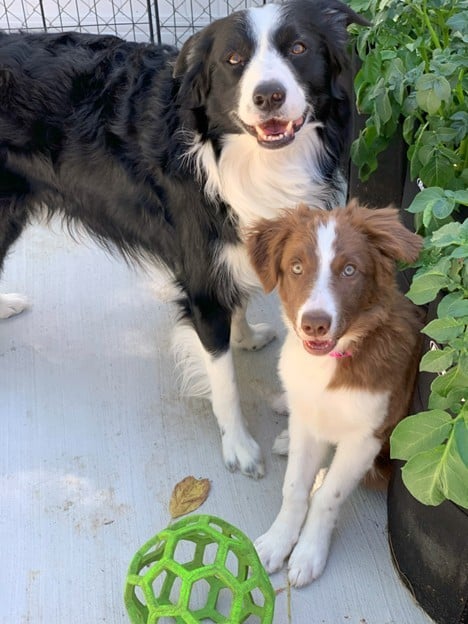

Puppy socialization is one of the most important things you can do for your new best friend that sets the stage for a lifetime of confidence, stability, and a well-rounded puppy experience! Let’s walk through the best practices, based on the latest guidelines from the American Veterinary Society of Animal Behavior (AVSAB) and see how the newest veterinary vaccine recommendations, the LEGS model and AKC “Puppy Start Right” classes work hand in hand to shape your puppy’s world all the way to 16 weeks and beyond.
Affiliate disclosure: Some links in this post are affiliate or partner links, and I may earn a small commission at no extra cost to you; as an Amazon Associate, I earn from qualifying purchases. As a Licensed Family Dog Mediator (LFDM), I offer education and coaching, not diagnosis or treatment; please consult your veterinarian about your dog’s health and behavior.
What Socialization Really Means
Socialization isn’t just about meeting lots of people and dogs, it’s about careful, positive exposure to all sorts of sights, sounds, environments, and experiences during your puppy’s early months, especially from 8 to 16 weeks. This “golden window” is when puppies are most open to new things, and thorough socialization at this stage prevents anxiety, aggression, and many common behavioral problems down the line. If a puppy isn’t well socialized by 16 weeks, chances are higher they’ll develop fears or issues adapting later on.
• Safe, positive experiences are key! Avoid overstimulation that might cause fear or withdrawal.
• Let your puppy investigate a variety of people, animals, places, surfaces, and objects, at their own pace, using treats and praise as reward.
• Puppy classes (which can start as early as 7-8 weeks) give safe, vetted exposure which is a big bonus for households hoping to combine training and confidence-building.
• Socialization continues after 16 weeks, but early positive encounters are the building blocks for a happy, well-adjusted dog.
A Modern Puppy Immunization Schedule
Keeping your puppy’s social adventures safe means staying on top of vaccines. Here’s the most up-to-date vaccine schedule recommended by leading veterinary organizations for puppies from birth through two years:
Puppy Age, Core Vaccines, Lifestyle/Optional Vaccines, and Notes:
6–8 weeks DAP (Distemper, Adenovirus, Parvovirus) Bordetella, Parainfluenza. First set; some combos include Parainfluenza.
10–12 weeks DAP/DHLPP (adds Leptospirosis) Lyme, Canine Influenza. Repeat combo, based on lifestyle and risk.
14–16 weeks DAP/DHLPP, Rabies Lyme, Canine Influenza Rabies as required by law, finish vaccine series.
1 year DAP/DHLPP Booster, Rabies Booster as recommended. Timely booster after puppy series.
Every 1–3 yrs DAP/DHLPP, Rabies as recommended. Core revaccination as directed by your veterinarian.
Your vet may tailor this schedule depending on your area, lifestyle, and health considerations. “DAP” covers three key diseases; “DHLPP” adds Leptospirosis and Parainfluenza.
How does the L.E.G.S.® Model fit in?
The L.E.G.S.® model; Learning, Environment, Genetics, and Self reminds us that a puppy isn’t a blank slate! Every puppy brings their natural instincts, early learning, home setup, and unique personality to life. As Kathy Callahan CPDT-KA recommends , applying L.E.G.S.® means:
• Learning: Training; not sit, stay, come necessarily, but exercises that focus on bonding, communication, predictability and agency. Every positive experience, from gentle touch to new noises, shapes the brain.
• Environment: Management and Enrichment; Safe, clean spaces with enriching toys and varied surroundings matter.
• Genetics: Some behaviors are “hardwired”; breed traits affect confidence and curiosity.
• Self: Age; puppy is a baby! Health: get a stool sample first thing (even if your breeder says the wormings were all done). Nutrition: feed a little more than what you THINK they need for the first few weeks to make sure puppy is not hungry, and acting out because of hunger. Individual personality, health, and previous experiences will guide YOUR puppy’s journey.
By practicing socialization and vaccination within the L.E.G.S.® framework, we’re better able to set puppies up for true well-being instead of “perfect” behavior, the goal is confident, resilient, and healthy companions. If you need a good book to help you through these first weeks and months with a new puppy, look at Kathy Callahan’s book “Welcoming Your Puppy from Planet Dog: How to Go Beyond Training and Raise Your Best Friend” You can also check out Kathy’s L.E.G.S.® seminar “The Cutest L.E.G.S.® of All-Puppies!” .
The Karen Pryor “Puppy Start Right” and AKC “S.T.A.R.“ Puppy classes are fantastic options for new puppy parents looking to give their pups a great, early start in life. These classes aren’t just about teaching basic obedience like sit and stay, they’re specifically designed to create safe, well-supervised spaces where puppies can experience new people, other puppies, and novel situations with professional guidance. Attending these classes early on helps puppies develop confidence, learn proper social cues, and build foundational skills using positive reinforcement. Research has shown that puppies enrolled in structured classes interact with a wider range of people and dogs, recover more quickly from mild scares, and form stronger bonds with their owners. These gains in confidence and social skills can help prevent fear and behavioral issues later in life, making “Puppy Start Right” and “S.T.A.R.” classes a key building block in your puppy’s socialization journey.
Explore Socialization, Week by Week
Ready to get started? Each week from 8 to 16 brings new opportunities: from car rides and gentle handling to noise exposure, puppy playgroups, novel surfaces (think grass, tile, wood), and friendly new people (in safe settings). Always watch your puppy’s body language and never rush or force them; confidence grows when pups can control the pace, backed by your encouragement and reward.
Next Steps
Make every week count! Plan fun, gentle socialization activities for your puppy, then pair each new adventure with timely veterinary visits for immunizations. The early weeks race by, but smart socialization and up-to-date vaccines give your puppy the best chance at a lifelong friendship filled with tail wags, not worries. If you have questions about new experiences, safe friends, or vaccines, reach out to your veterinarian or a local positive-reinforcement puppy class. Start exploring together, the world is waiting for your puppy’s next happy memory!
Featured Image Top of Page: FSBC Quinn and FSBC Tess Puppy
Disclaimer
All information provided is for general guidance only and should be reviewed by each owner. As a Licensed Family Dog Mediator (LFDM), I offer education and coaching and do not diagnose, treat, or prescribe; always consult your own Veterinarian and a Certified Professional Dog Trainer before applying any advice or routines to your puppy or dog. Some links on this page or site may be affiliate or partner links, and I may earn a small commission at no extra cost to you; as an Amazon Associate, I earn from qualifying purchases.
Review our “Terms and Conditions” and “Privacy Policy” for more information.
Copyright © 2026 · All Rights Reserved
Border Collie HQ